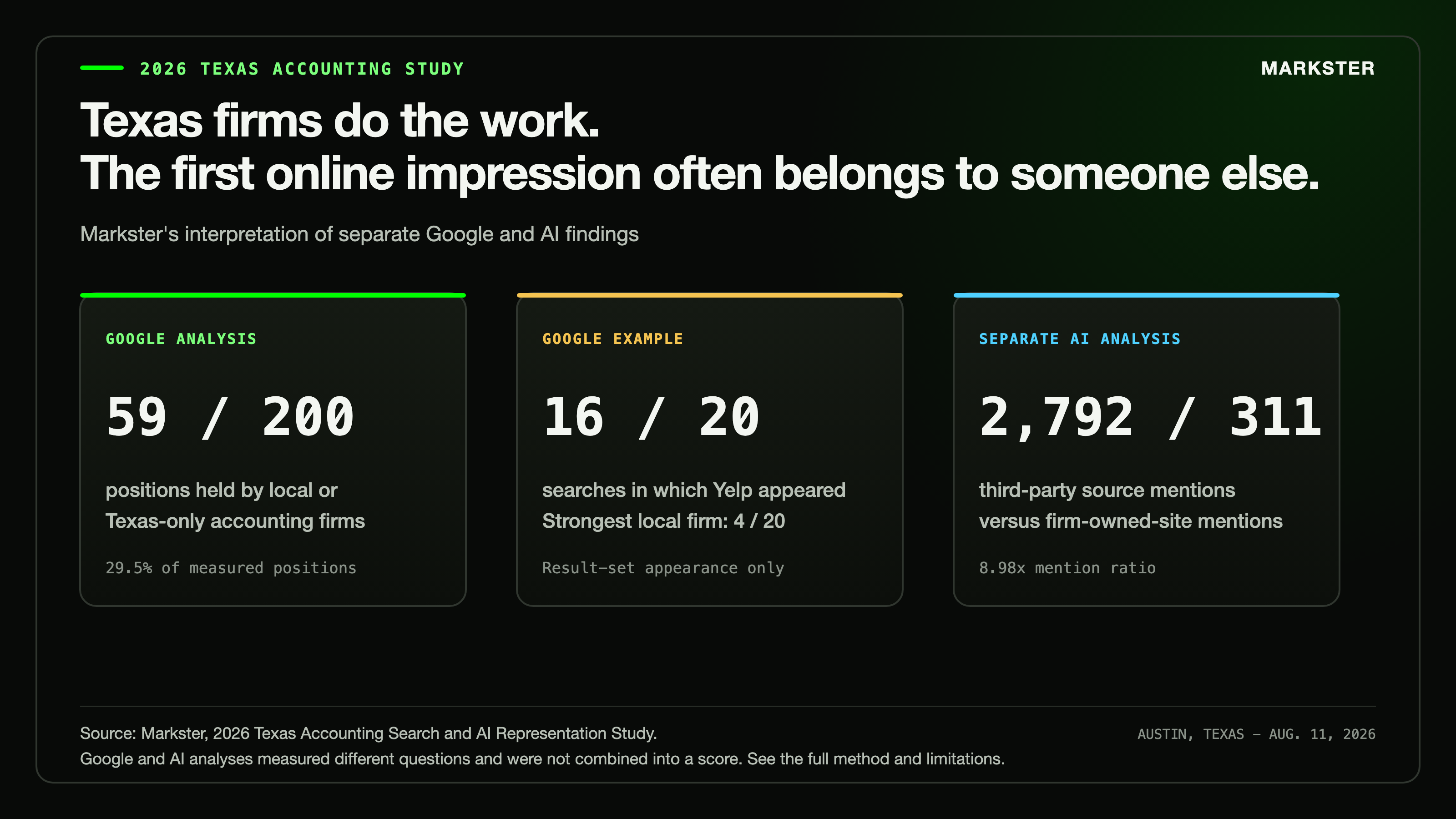
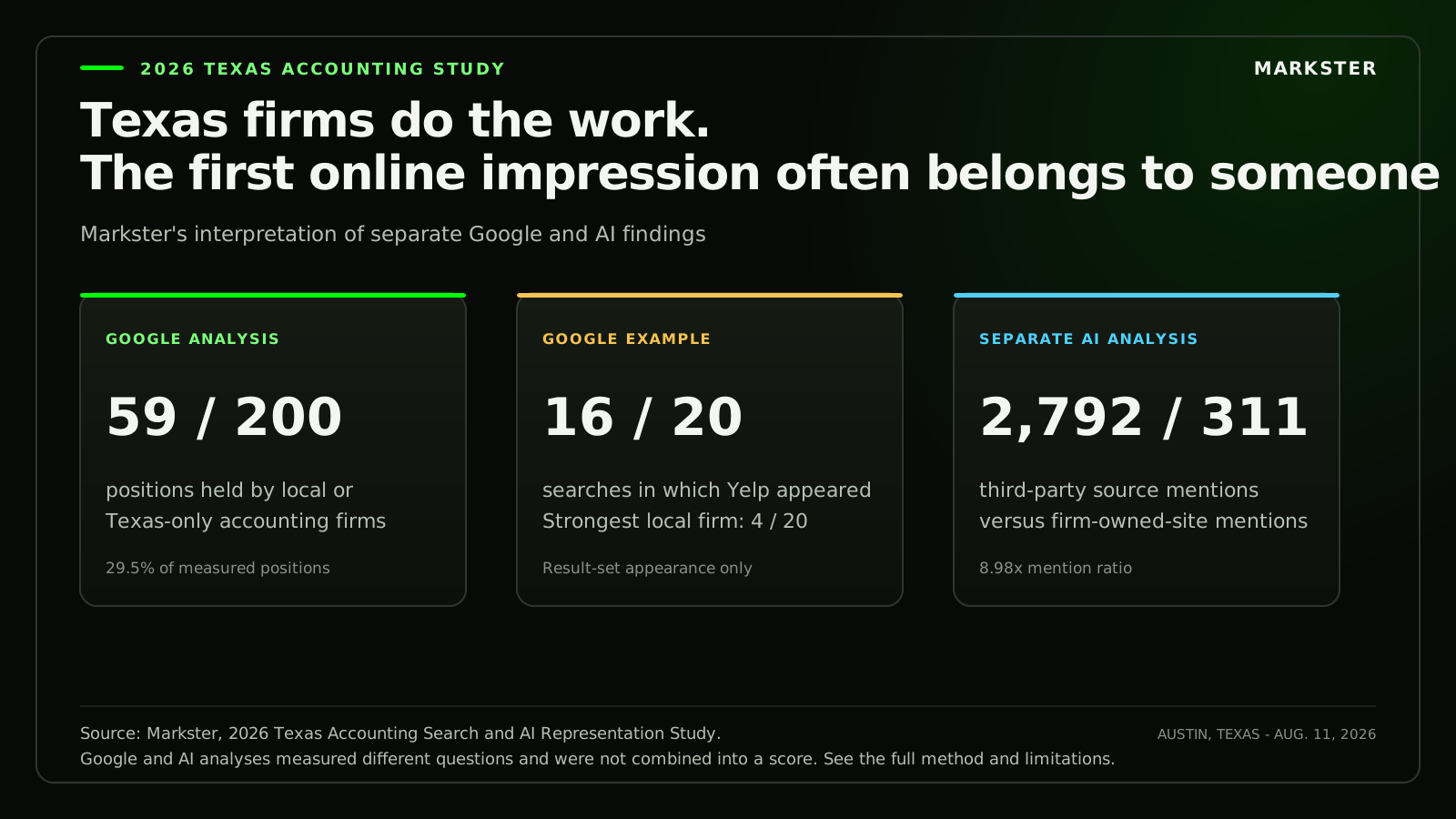
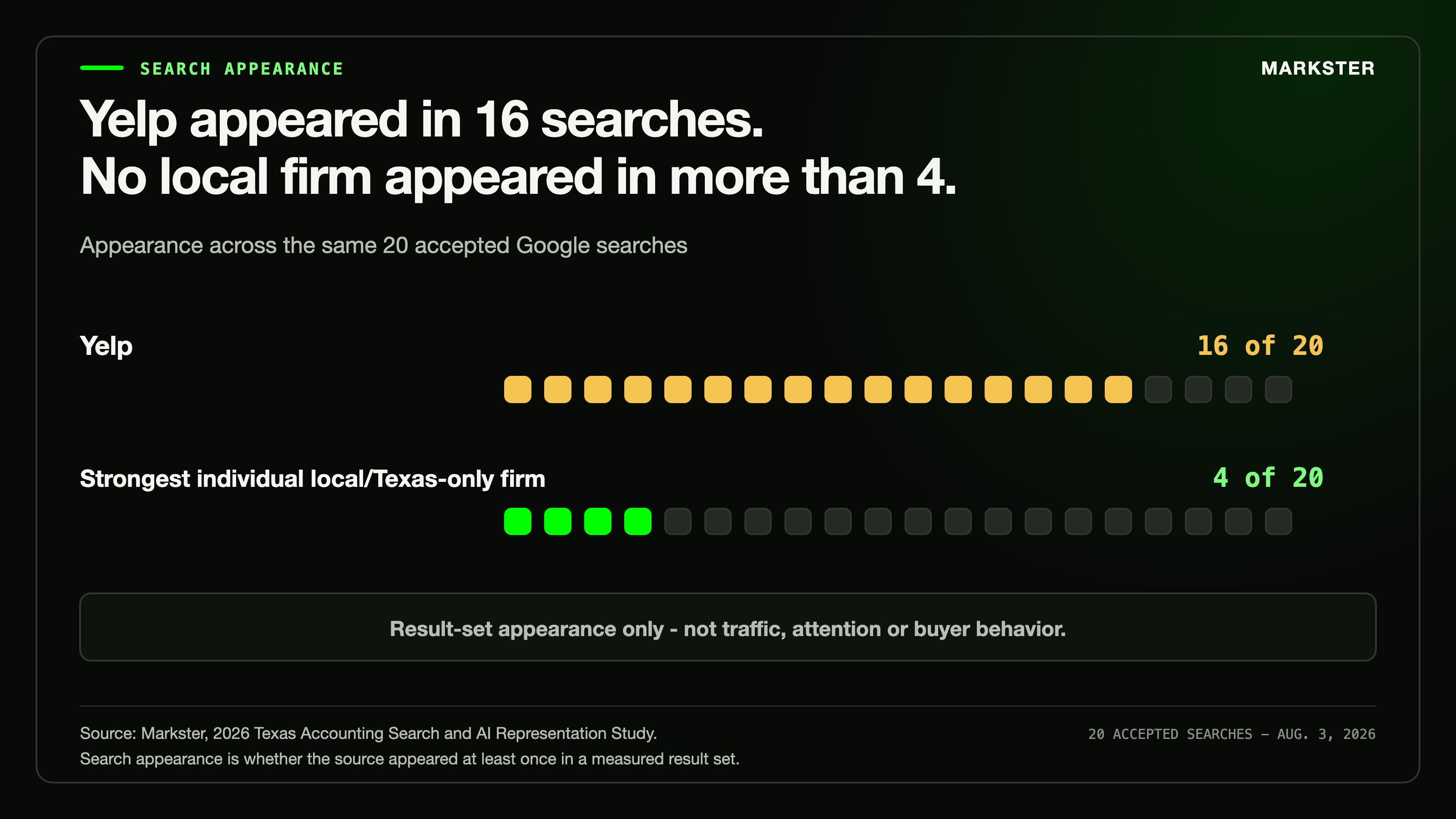
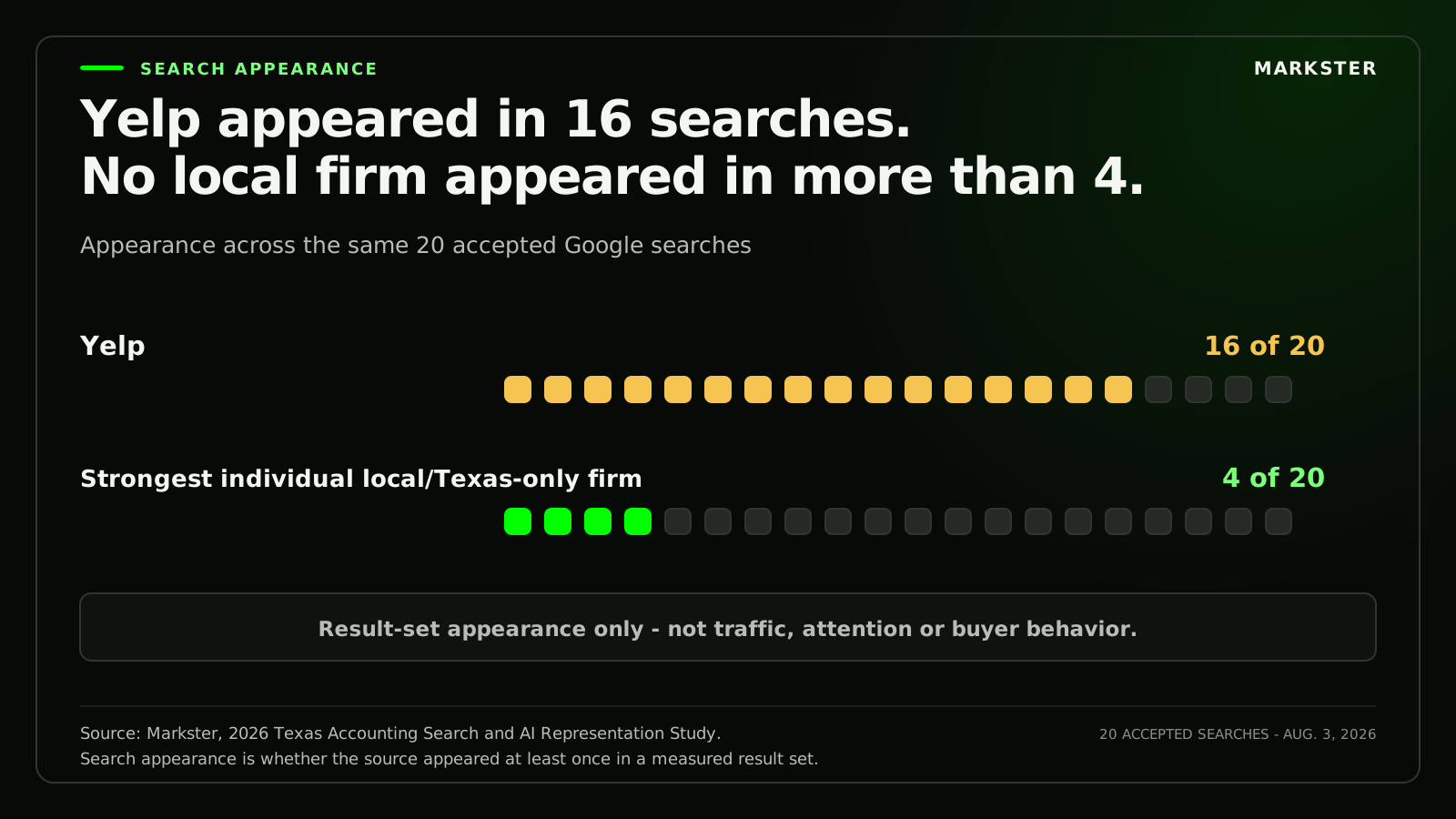
Directories and marketplaces together held more top positions than all local or Texas-only firms combined. Yelp appeared in 16 of 20 searches, while no individual local or Texas-only accounting firm appeared in more than four. In a separate analysis of 567 firms, directories, review sites and marketplaces accounted for almost nine times as many recorded source mentions as firm-owned websites.
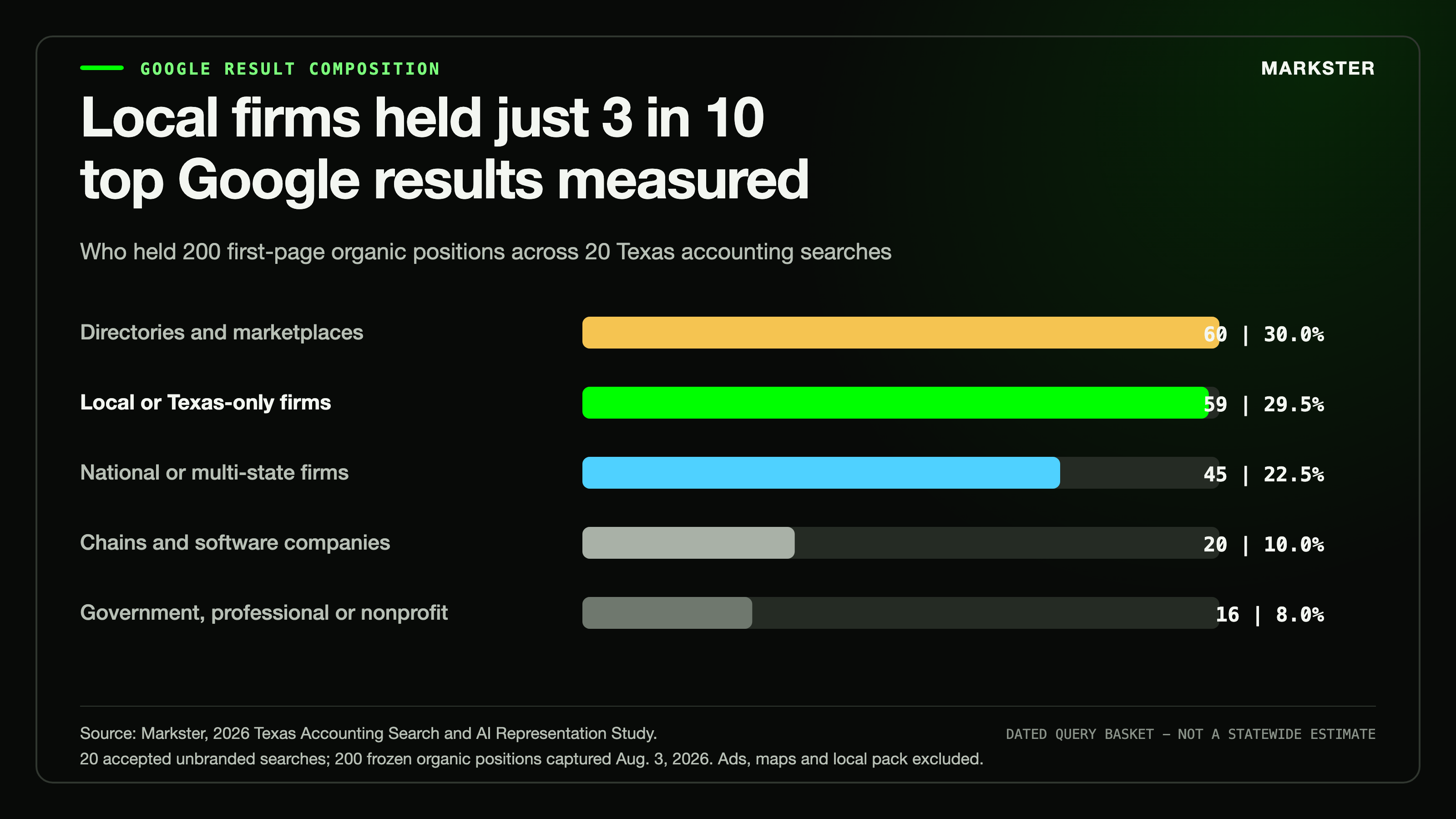
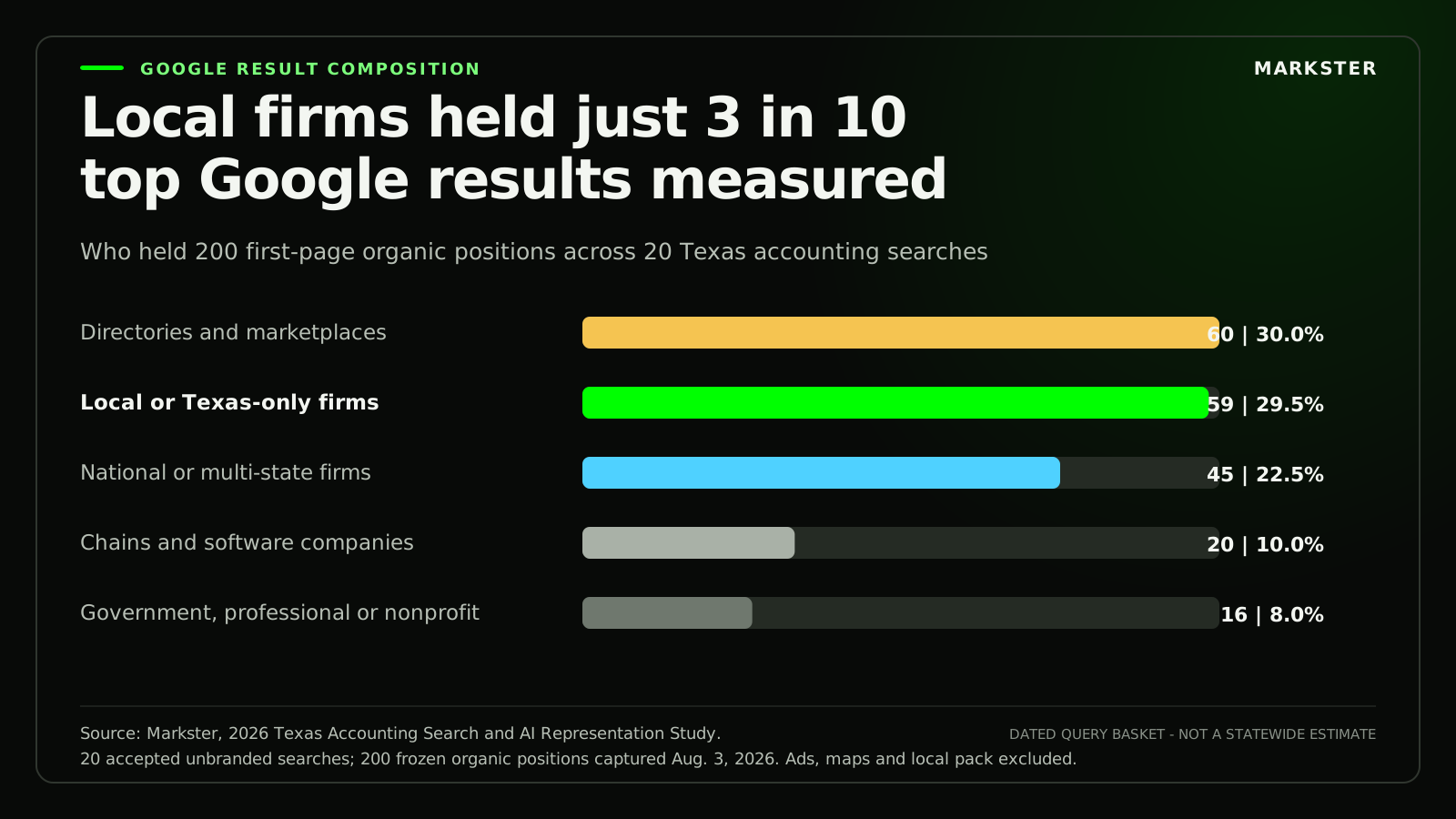
Across 20 unbranded Google searches for accounting services in Texas, local or Texas-only firms held 59 of 200 first-page organic positions. Everyone else held 141.
Directories and marketplaces held 60 positions. National or multi-state firms held 45. Chains and software companies held 20. Government, professional and nonprofit organizations held 16.
Yelp appeared in 16 of the 20 searches. No individual local or Texas-only accounting firm appeared in more than four.
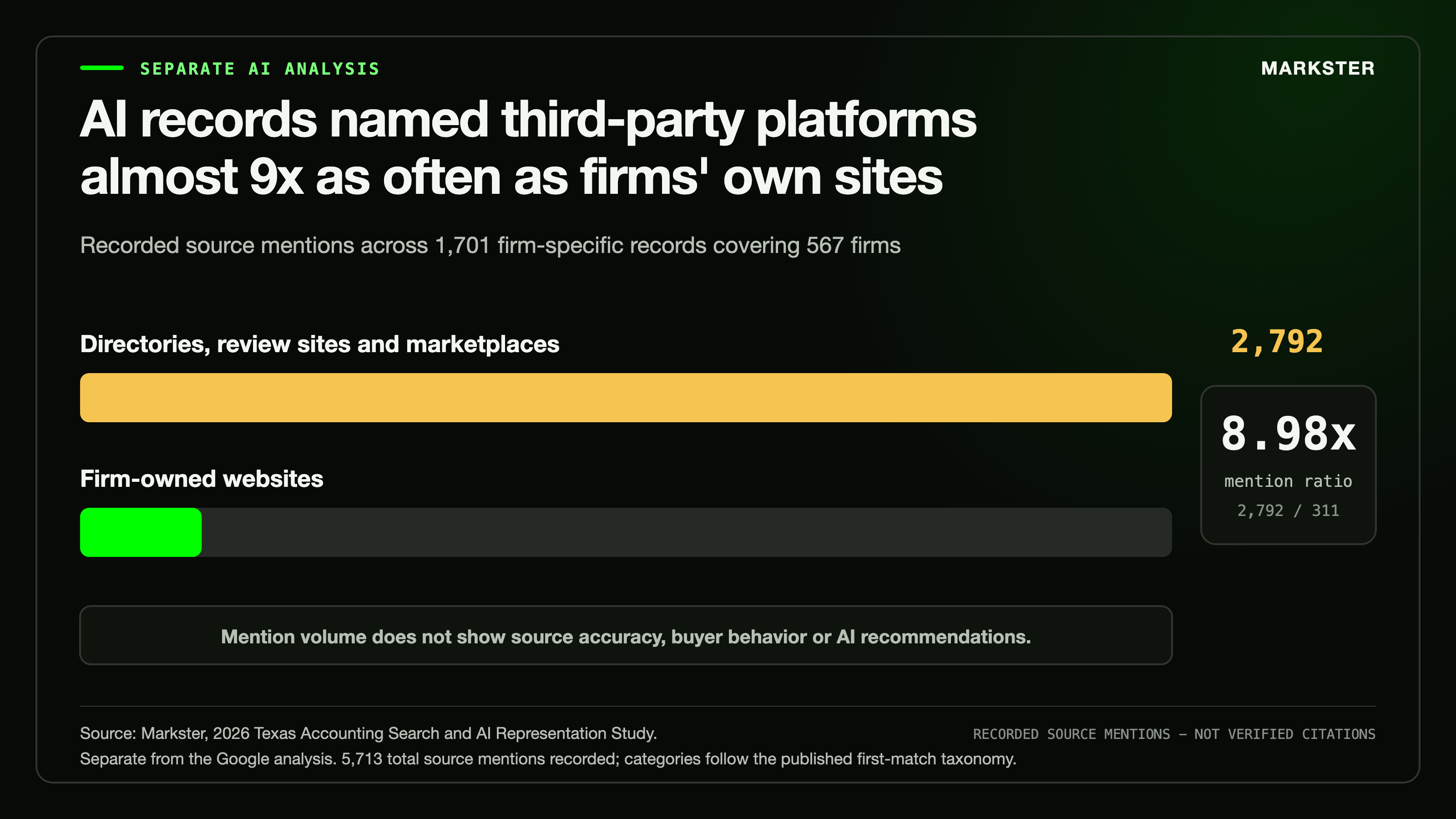
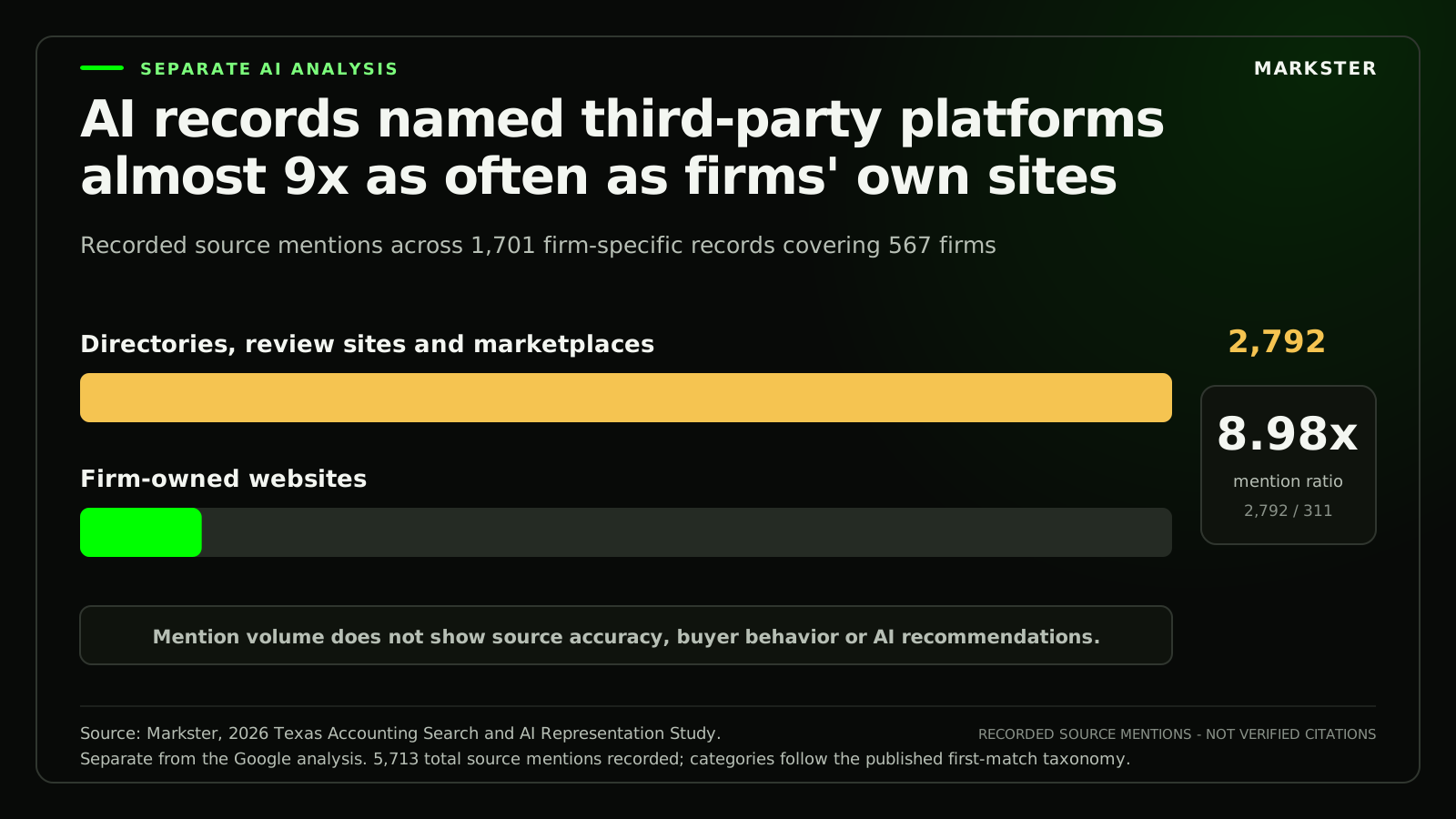
A separate AI analysis produced 1,701 retained firm-specific records covering 567 firms. The workflow recorded directories, review sites and marketplaces 2,792 times as sources, compared with 311 recorded mentions of firm-owned websites. The AI analysis began after each firm was named and did not test which firm an AI service would recommend.
The Google and AI analyses measured different questions and were not combined.
Texas firms do the work. The first online impression often belongs to someone else.
"Texas firms do the work, but local or Texas-only firms appeared in only three of every ten top Google results we measured," said Ivan Ivanka, founder and CEO of Markster. "Directories and national brands occupied most of the rest. In the separate AI analysis, directories, review sites and marketplaces accounted for almost nine times as many recorded source mentions as firm-owned websites. A business can do excellent work and still not make the first online impression."
Markster froze 24 unbranded accounting-service and Texas-geography search combinations before collection. Twenty returned enough organic-result depth to assess. Four shallow or provider-error result sets were excluded rather than counted as absence.
The accepted set contained 200 first-page organic positions. The review excluded advertisements, maps and the local pack.
For this study, “local or Texas-only” means accounting firms operating only in Texas or locally within the measured market. National and multi-state firms were counted separately, including when they operated Texas offices.
| Result category | First-page organic positions | Share of 200 |
|---|---|---|
| Local or Texas-only accounting firm | 59 | 29.5% |
| National or multi-state accounting firm | 45 | 22.5% |
| Directory or marketplace | 60 | 30.0% |
| Chain or software company | 20 | 10.0% |
| Government, professional or nonprofit organization | 16 | 8.0% |
| Total | 200 | 100.0% |
No position remained unresolved after manual review.
The plain-English split is 59 positions held by local or Texas-only firms and 141 held by everyone else. Yelp appeared in 80% of the accepted searches. The strongest showing by any individual local or Texas-only accounting firm was 20%.
The Google review measured what appeared in a dated basket of unbranded searches where no accounting firm had been named. It did not measure search volume, buyer behavior, calls, leads or hiring decisions. Search results can change.
Markster's AI analysis produced 1,701 retained records for 567 named firms. Eleven records listed no source, leaving 1,690 sourced records.
Among those sourced records:
Across all 1,701 records, the workflow recorded 5,713 source mentions:
| Recorded source category | Source mentions | Share of 5,713 |
|---|---|---|
| Directory, review site or marketplace | 2,792 | 48.9% |
| Firm-owned website | 311 | 5.4% |
Directories, review sites and marketplaces accounted for almost nine times as many recorded source mentions as firm-owned websites. That comparison is 2,792 divided by 311, or 8.98 to one before rounding.
A source mention is one source name recorded inside one firm-level AI analysis record. It is not a click, impression, verified citation, recommendation or buyer action. The table isolates the two categories central to this comparison and is not the complete source taxonomy.
The source names do not establish who wrote or controlled the underlying information, whether the firm supplied it, or whether it was accurate. Some records named a source category or domain without exposing a firm-specific source-location URL.
BrightLocal reported that 45% of U.S. consumers had used AI tools for local-business recommendations during the previous year, up from 6%. Among the AI users surveyed, 88% checked whether sources or reviews were legitimate, and 97% at least sometimes checked AI recommendations against real reviews.
Search engines, directories and national brands already compete with local firms for visibility. AI adds another layer that can assemble an introduction from available digital evidence.
The Associated Press reported that Yelp introduced an AI assistant for local recommendations and licenses some data to OpenAI. That development does not establish how any source in this study was generated. It shows why control of local-business evidence is becoming a current platform question.
The measured result is that local or Texas-only firms held a minority of the Google positions and that the separate AI records leaned heavily toward directory, review-site and marketplace source labels. Markster's interpretation is that the first online impression often belongs to someone other than the local firm doing the work.
The study did not observe customers choosing the wrong firm, AI recommending national firms over local firms, or any resulting loss of revenue.
Accounting firms are the evidence base for this study. The question extends beyond accounting without claiming that the same measured pattern exists elsewhere:
When a customer or an AI system investigates a local business, does the business's own evidence arrive before somebody else's version of it?
Any local service business can examine that question across its website, search results, directory profiles, reviews and AI representations.
For a deeper methodological check, Markster's automated research system produced one retained firm-specific record under each of three AI service labels: OpenAI, Gemini and Perplexity. This was a structured analysis workflow, not a person manually entering firm names into three consumer chat products.
For 513 of 567 firms, the three retained records contained a mix of positive and negative source-support flags. For 352 firms, at least two of the three records received the negative flag. Across all 1,701 records, 973 received it.
| AI service label inside the research workflow | Records with the negative source-support flag | Other records | Share with negative flag |
|---|---|---|---|
| OpenAI | 567 | 0 | 100.0% |
| Gemini | 75 | 492 | 13.2% |
| Perplexity | 331 | 236 | 58.4% |
| All records | 973 | 728 | 57.2% |
The research service did not expose the exact model and version configuration behind each label, so these counts are not a benchmark of current consumer products. They document what the structured workflow recorded under defined conditions.
The 352-of-567 figure is supporting arithmetic, not a vote among three equivalent systems. Every OpenAI-labeled record received the negative flag, so a firm entered the 352-firm group whenever at least one of the other two records also received it.
The study records two different judgments.
This field comes from the analysis layer in each stored record. Markster aggregated it as:
The 513-firm split, provider-label totals, 973-record total and 352-firm majority arithmetic come from this field.
This field records what Markster could establish from identifiable evidence outside the analysis-layer flag:
A record can indicate reliable firm-specific support while independent verification remains partial or impossible. A named source without a checkable firm-specific URL is not the same as a verified citation. The private report shows the two layers separately.
A commercial business-database export produced 724 candidate company domains. Markster froze 569 firms for the Aug. 3 AI analysis. Of those, 567 had complete records across all three AI analysis tracks and form the reported cohort.
| Cohort step | Count |
|---|---|
| Candidate company domains | 724 |
| Firms frozen for the Aug. 3 analysis | 569 |
| Firms with complete three-track AI records | 567 |
| Retained firm-level AI records | 1,701 |
The cohort is constructed. It is not a census or probability sample of every accounting firm in Texas. The commercial database remains unnamed unless public attribution is contractually permitted.
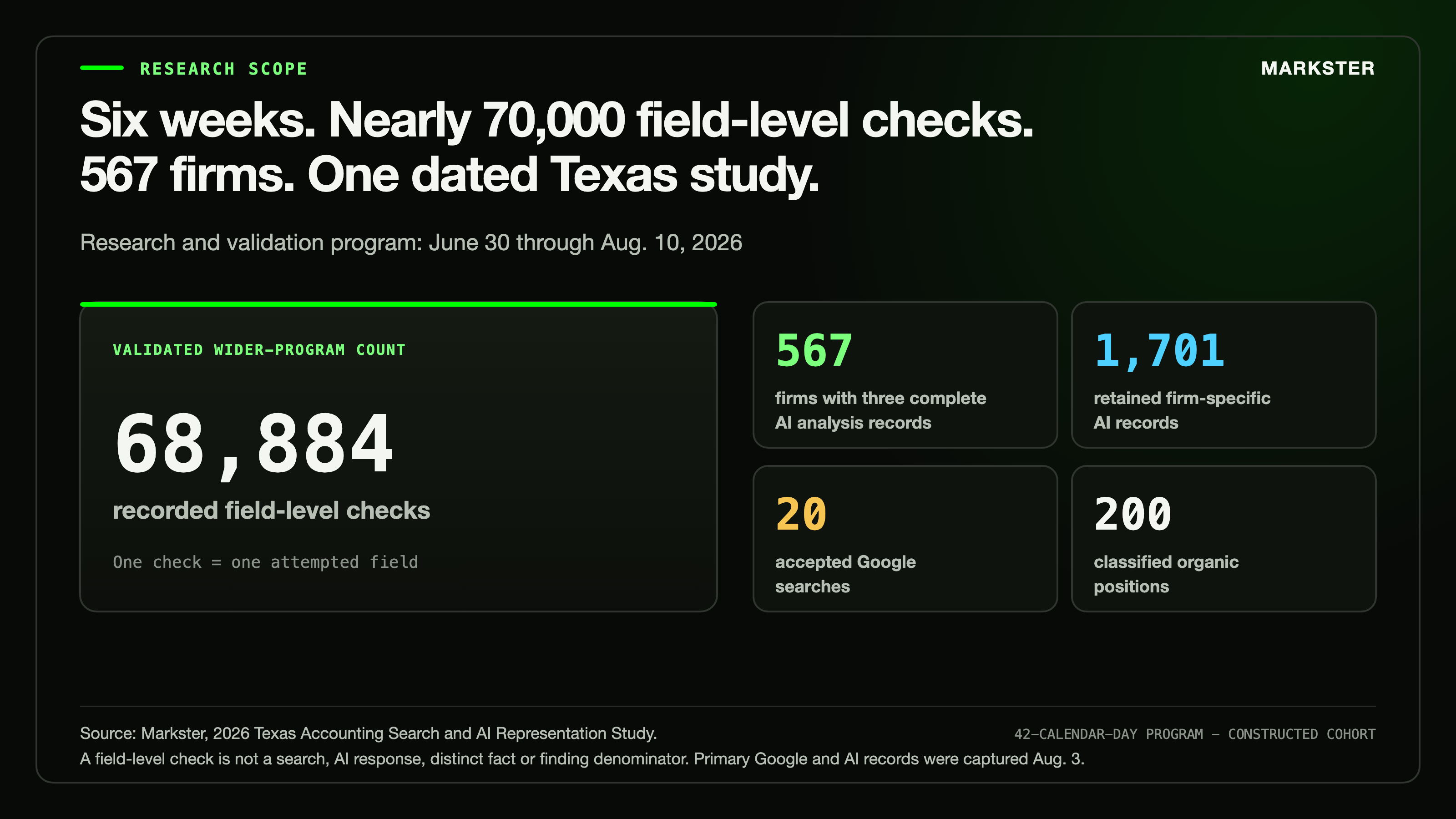
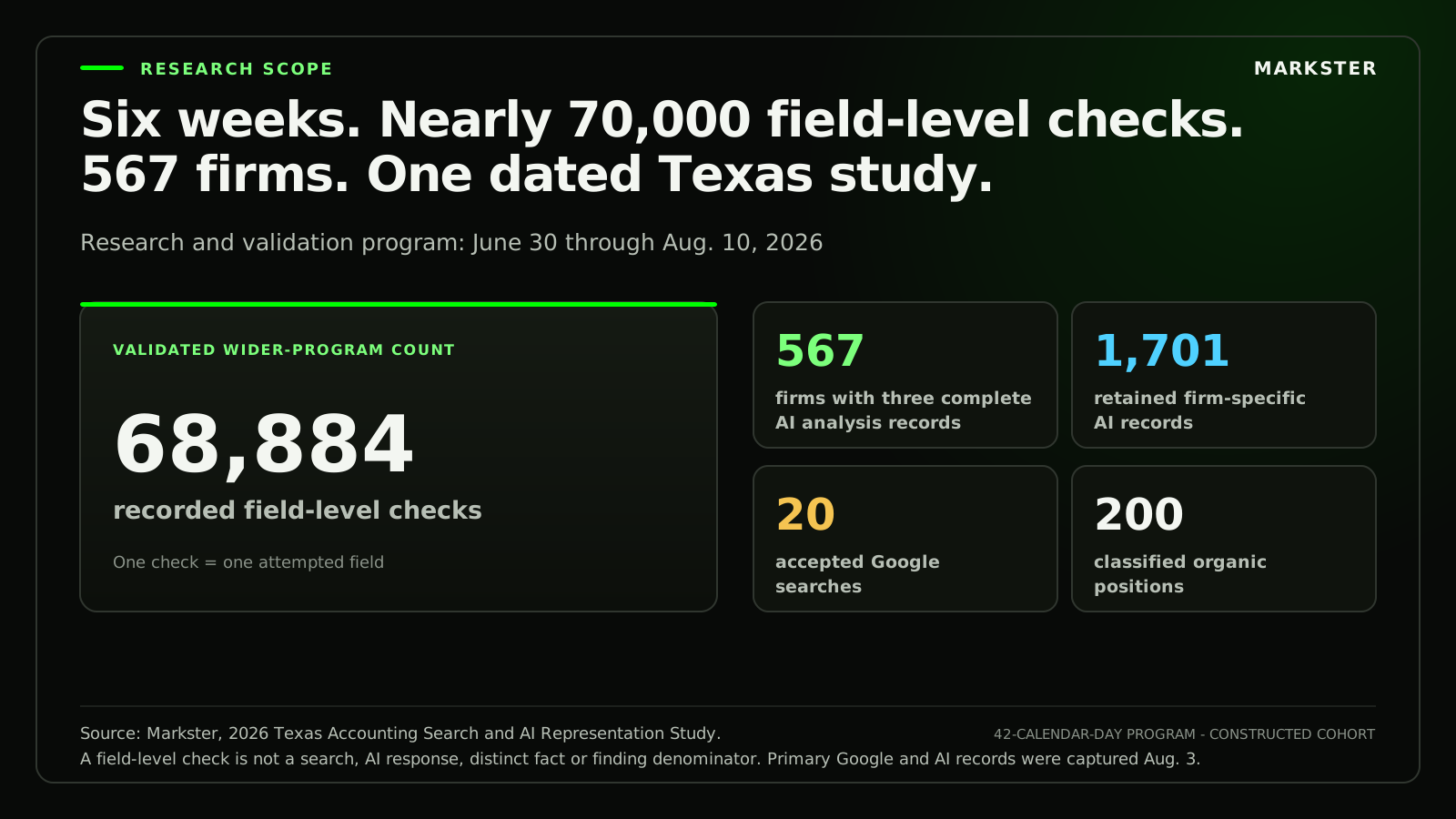
Markster developed, collected and validated the wider research program from June 30 through Aug. 10, 2026. That is 42 calendar days, or six weeks. The primary Google captures and AI records reported here were collected Aug. 3.
After invalid cells from a failed collection lane were removed, the program contained 68,884 validated field-level checks.
| Collection group | Recorded field-level checks |
|---|---|
| Website-scan summary | 13,032 |
| AI-analysis summary | 6,940 |
| Verification and exploratory artifacts | 42,422 |
| Cadence, search-classification and authority blocks | 6,490 |
| Validated total | 68,884 |
One field-level check means one field the collection attempted to evaluate for one firm, site, analysis or captured result. Missing, unavailable and no-result outcomes count when the collection attempted the field. Derived rollups do not.
The total is not 68,884 searches, AI responses, firms, independent observations or distinct facts. It describes the scale of the wider collection and verification program and is not the denominator for a public finding.
The retained AI dataset keeps the first record for each firm and AI analysis track. Twelve later records from four duplicate firm submissions were excluded. Three of those 12 flags differed from the retained records, but the changed submissions also used materially different company-name inputs. This was not a controlled same-input test-retest and does not estimate an error rate.
The study does not measure:
The public study does not publish private contact data or a list of firms by source-support flag. Firm-level reports remain private.
A requested report is released only after the requester is matched to the firm through a work-email domain or manual review and the report passes evidence and company-match checks. If a report is not ready, fulfillment stays on hold while Markster repairs or verifies the evidence. Reports are not public downloads.
Questions about the method, corrections and removal requests go to press@markster.ai. A correction or removal request places related outreach on hold while a person reviews it.
If your firm was included, the private report shows:
The report is a dated evidence review, not a public ranking, a judgment about the firm's quality or a guarantee that a recorded source is accurate. No call or purchase is required.
Nothing is submitted until you complete and send the form.
Markster is a U.S.-based, operated revenue systems company backed by 500 Global. It builds and operates Revenue Engine, which carries approved sales and marketing work forward across the tools a company already uses.